
If you’re creating a training video, PowerPoint presentation, or eLearning course, how do you ensure your final product will be an effective learning resource?
You don’t want to spend hundreds of hours developing an eLearning only to find that your audience thinks it confusing and uninteresting.
To help us create the most effective multimedia learning experiences, Richard Mayer has developed a theory of 12 Principles of Multimedia Learning. Think of these principles as ‘guidelines’ as you develop your digital learning experiences – learning videos, eLearning courses, and instructor-led PowerPoint presentations.
“5” Famous Principles of Multimedia Learning:
-
The Redundancy Principle
Next up? The Redundancy Principle. This principle suggests that humans learn best with narration and graphics, as opposed to narration, graphics, and text. The theory here is that if you already have narration and graphics, then the text on top is just redundant information. And this can be overwhelming for a learner.
-
The Coherence Principle
First up is the Coherence Principle, which states that humans learn best when extraneous, distracting material is not included.
Simply said, cut out the extras. Use only the information that the learner needs. And most often, that means simple text and simple visuals that relate directly to the learning topic. Remove all the fluff.
-
The Signaling Principle
Next up is the Signaling Principle, which essentially means that humans learn best when they are shown exactly what to pay attention to on the screen. If there is a ton of information on the screen, how is the learner supposed to know what is the most important part?
-
The Spatial Contiguity Principle
The Spatial Contiguity Principle is about the actual space in between your text and visuals on the screen, stating that humans learn best when relevant text and visuals are physically close together.
-
The Segmenting Principle
Next is the Segmenting Principle which states that humans learn best when information is presented in segments, rather than one long continuous stream. Mayer found that when learners can control the pace of their learning, they performed better on recall tests.
-
The Pre-Training Principle
The Pre-training Principle states that humans learn more efficiently if they already know some of the basics. This often means understanding basic definitions, terms, or concepts before beginning the learning experience.
And this makes intuitive sense. If a learner starts an eLearning course knowing about the topic, they can easily become overwhelmed once complex visuals and definitions start being thrown their way. A bit of pre-training before starting the course really would have helped.
-
The Modality Principle
The Modality Principle states that humans learn best from visuals and spoken words than from visuals and printed words. This doesn’t mean that you should never use text on screen, it simply means that if there are visuals and too much text, learners will be overwhelmed.
SCREEN CASTING:
Which principles in my mind when I were creating My screencast?
-
Dual Coding: Learning materials can be visually represented in many ways such as graphic organisers, flow charts, diagrams, cartoon strips, editable timeline and infographics.
-
Instrinsic: I didn’t use lots of websites and ways to explain how to use Those math tools. I just show it very directly and clear.
What i choose not to add in my Video:
- Adding Music – distract my audience
- Using line tools – I believe my recomended requires explaining more than showing.
Online Resources
- Mathway – Mathway is the world’s smartest math calculator for algebra, graphing, calculus and more! Mathway gives you unlimited access to math solutions that can help you understand complex concepts.
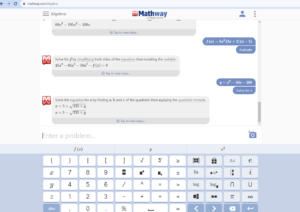
- Desmos – At Desmos, we imagine a world of universal math literacy and envision a world where math is accessible and enjoyable for all students.

Hi Mink!
Great blog post. I really appreciate the way you explained how to use mathway and demons. These are really good tools to solve math problems. I found your screencasting video very helpful. I saw you use Dual Coding and Instrinsic. I do learn a lot from your blog post.